Introduction
The American Revolution, spanning from 1775 to 1783, was a pivotal conflict that led to the birth of the United States of America. Rooted in political, economic, and ideological disputes between the Thirteen Colonies and the British Crown, the revolution culminated in a war that reshaped the global balance of power. This article delves into the causes, major battles, and enduring consequences of the American War of Independence.
1. Origins of the Revolution
1.1 Political and Economic Tensions
The aftermath of the Seven Years’ War left Britain with substantial debts, prompting the imposition of taxes on the colonies, such as the Stamp Act (1765) and the Townshend Acts (1767). Colonists viewed these measures as violations of their rights, encapsulated in the rallying cry “no taxation without representation.”
1.2 Ideological Underpinnings
Enlightenment ideals emphasizing liberty, self-governance, and natural rights permeated colonial thought. Figures like John Locke influenced American leaders, fostering a belief in the right to revolt against unjust authority.
2. The Outbreak of War
2.1 Early Conflicts
Tensions escalated into armed conflict with the Battles of Lexington and Concord in April 1775, marking the war’s onset. The subsequent Siege of Boston demonstrated the colonists’ resolve and strategic capabilities.
2.2 Declaration of Independence
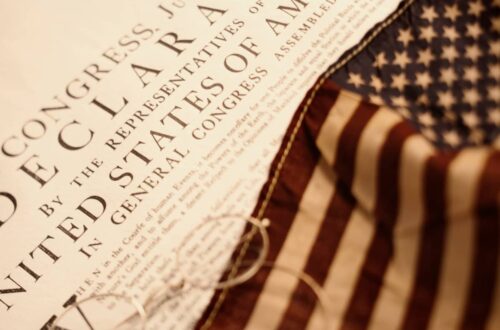
On July 4, 1776, the Second Continental Congress adopted the Declaration of Independence, authored primarily by Thomas Jefferson. This document articulated the colonies’ grievances and their intent to form an independent nation.
3. Major Battles and Turning Points
3.1 Battle of Saratoga (1777)
The American victory at Saratoga was a turning point, convincing France to enter the war as an ally to the colonies. This alliance provided crucial military support and international legitimacy.
3.2 Winter at Valley Forge (1777–1778)
Despite harsh conditions, the Continental Army, under General George Washington’s leadership, underwent rigorous training at Valley Forge, emerging as a more disciplined and effective force.
3.3 Siege of Yorktown (1781)
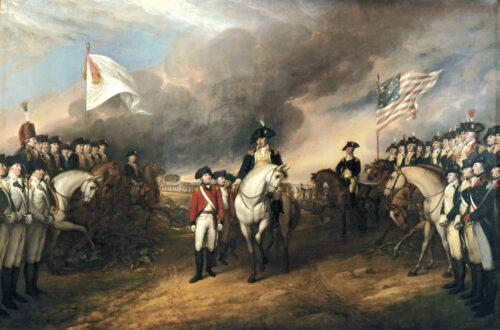
The combined American and French forces’ victory at Yorktown forced British General Cornwallis’s surrender, effectively ending major combat operations and paving the way for peace negotiations.
4. Conclusion and Legacy
The Treaty of Paris, signed in 1783, recognized the sovereignty of the United States and established its borders. The revolution inspired subsequent movements worldwide, promoting ideals of liberty and democratic governance.
References
- Britannica. (n.d.). American Revolution. Retrieved from https://www.britannica.com/event/American-Revolution
- HISTORY. (n.d.). Revolutionary War – Timeline, Facts & Battles. Retrieved from https://www.history.com/topics/american-revolution/american-revolution-history
- American Battlefield Trust. (n.d.). Overview of the American Revolutionary War. Retrieved from https://www.battlefields.org/learn/articles/overview-american-revolutionary-war
- National Park Service. (n.d.). American Revolution Overview. Retrieved from https://www.nps.gov/inde/learn/education/classrooms/upload/American-Revolution-Overview-v2.pdf
- Library of Congress. (n.d.). Overview – 1783 | U.S. History Primary Source Timeline. Retrieved from https://www.loc.gov/classroom-materials/united-states-history-primary-source-timeline/american-revolution-1763-1783/overview/
Tags: 1775–1783 American Revolution British Crown Revolutionary War Thirteen Colonies War of Independence